Marque & Reprisal Captains and Captain Cards
Card draw, redraw, home-port preview, goals, traits, and how one life shapes the next voyage.
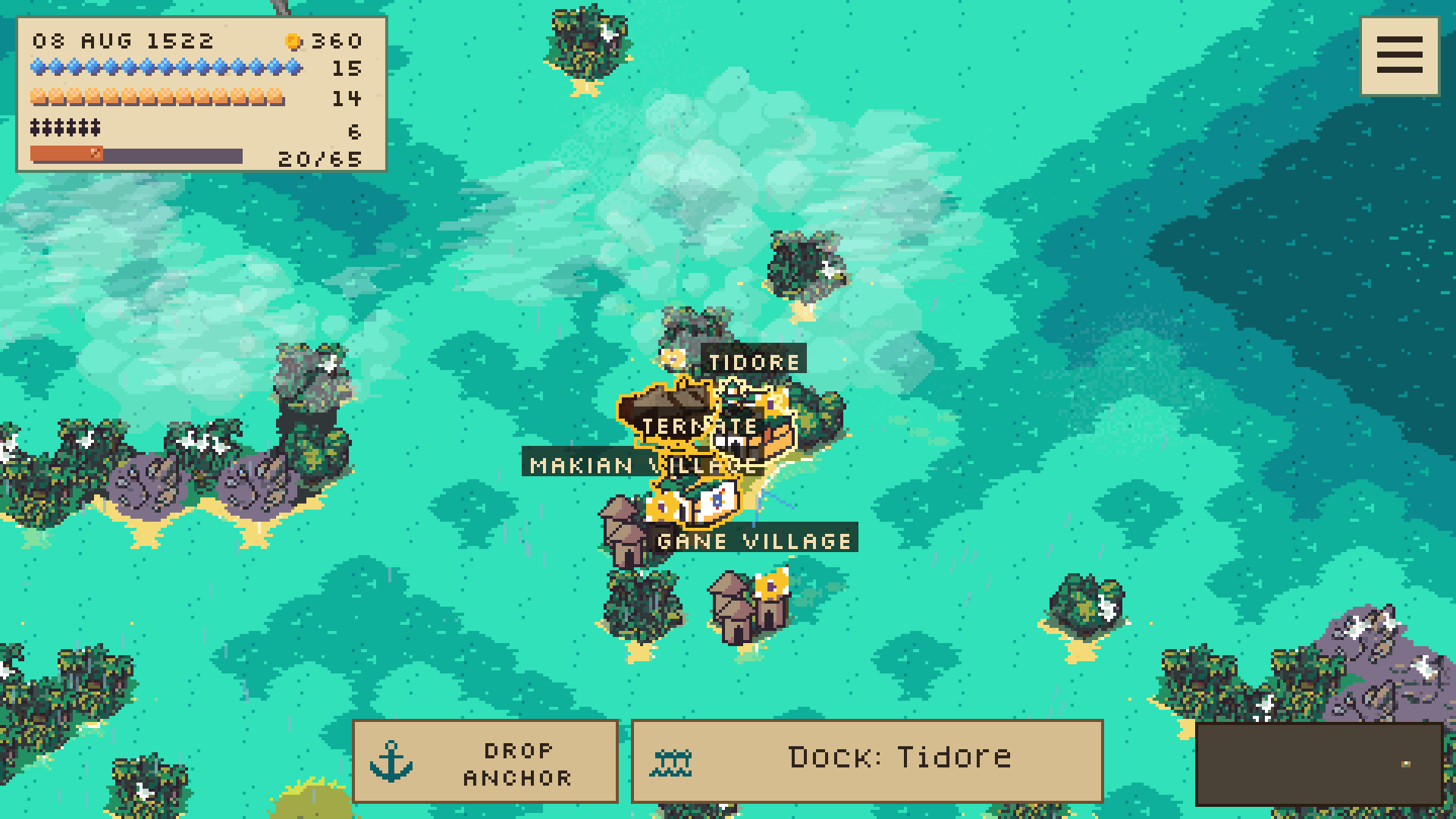
Every run of Marque & Reprisal is defined by a single captain. Iron Pagoda’s Age-of-Sail roguelike sandbox (Garrett Petersen) is set in 1522 on a 655,362-tile Earth with 331 cities. There is no multiplayer — one captain, one life, permadeath. Steam release is November 18, 2026 at $14.99 for Windows, macOS, and Linux, with a free Mediterranean (+ Black Sea) demo for practice. This guide covers how captain cards work, what to read before you sail, how goals and companions shape decisions, and what carries into the next voyage. Pair it with Getting Started and Launch Notes.
How captain cards appear
When a voyage begins, the camera visits ports on the sailing map while portrait cards rise, shuffle, and reveal. The presentation is map-driven: you see where a candidate lives and what kind of hull they bring before you commit. Cards surface home port, faith, past, ship, traits, and flags — the package that decides your first weeks at sea.
Read every line. A clever objective on a mismatched hull is still a bad voyage. Compare offered ships against the Ships Tier List and the broader Tier List Hub so cargo, oars, and guns match the plan you actually intend to run.
First voyage vs later voyages
Your first voyage assigns one captain automatically. There is no dual choice and no redraw yet — the game hands you a suitable starter so you can learn wind, docks, and stores without second-guessing the lobby. Treat that captain as a classroom: finish the sailing tutorial, practice short hops in the demo mindset, and chase a modest objective.
Later voyages offer two captains. After the first voyage you also gain a single Redraw: discard both offered captains, then draw two from the remaining fanfare cards. Confirm the redraw first; the discarded pair cannot return. Use redraw when both options share the same problem (wrong ocean, weak stores ship, combat hull for a trade goal). Do not redraw casually — you permanently thin the fanfare for that pick.
Home-port preview and skipping the tour
Before you lock in, choose a card to preview the starting port on the map. Confirm the home pier sits near waters you understand: rivers you can row, markets you can reach in a day, or coasts that match your ship’s strengths. You can skip the opening card tour if you already know the flow and want to decide faster — useful on second and third lives when you are hunting a specific goal type.
A home port is not just flavor. It is where you must return alive after completing the objective to win. Distance, politics, and supply lines all orbit that pier. Plan outbound legs with a return path in mind; see Survival and Trade Routes.
What captains carry on the card
- Home port — spawn and victory return point
- Faith — cultural and political context for ports and company
- Past — backstory that frames tone and sometimes opportunity
- Ship — starting hull; upgrades come later through play
- Traits — strengths and soft limits that nudge playstyle
- Flags — standing cues that color who hails you as friend or foe
None of these replace seamanship. Traits do not refill water; a proud past does not tack for you. Learn wind in Sailing Controls and keep stores honest every dock.
Goals: how you win
Goals vary by captain. Examples include paying a debt, discovering wonders, hunting a white whale, seeking pirate treasure, and other objective flavors. Fighting is optional — many captains win through trade, fishing, exploration, or careful piracy. Victory means complete the objective and return home. A dead hero who almost finished the quest still loses.
Let the goal steer heading, not vanity. A white-whale hunt pulls you toward whaling grounds covered in Fishing & Whaling. A debt run favors tight market loops. Treasure or wonder goals reward patient charting over random brawls — when combat does matter, read Combat & Piracy first.
Companions, crew, and passengers
Companions and crew can object before you attack their country or home. Listen. Ignoring them can cost loyalty, fight readiness, or future help when you need an escort. Passengers who decline a dangerous course wait at an inn rather than vanishing from the world — you can reconnect later instead of forcing a mutiny-shaped story.
Hail friendly captains when standing allows: escorts and barter expand what one hull can survive. Those social tools are launch-era staples summarized under Updates, Launch Notes, and the curated Patch Log. For combat practice without risking a captain, use Historical Battles.
Shore leave, stamina, and hull strength
Successful docking and shore leave restore rowing stamina for the next forced upwind or river crawl. Being refused entry does not restore stamina — get a clean dock when you can. A pre-launch update also raised hull strength by about 50% while keeping mass and handling coherent, so captains are slightly tougher without turning the game into a bullet sponge. Still treat storms and empty casks as the real killers.
After the voyage: one upgrade forward
When a voyage ends — victory or sinking — you may carry one upgrade item into the next voyage. That soft meta progress does not undo permadeath: the captain is still gone, the new life still starts with cards and a fresh goal. Choose the carry-over that fixes what killed you (stores, nets, guns, navigation aids) rather than the flashiest trophy.
Practice the whole loop in the free Mediterranean demo before you burn prized full-map captains — Demo Tips — and confirm your machine via System Requirements.
Decision checklist before you sail
- Read home port, ship, traits, and goal together — not as separate trivia
- Preview the port on the map; skip the card tour only if you already know the UI
- On later voyages, redraw once only when both offers share a fatal mismatch
- Stock food and water before the first departure
- Let the objective define the first week’s heading
- Respect crew objections about attacking their country or home
- Dock for shore leave when rowing stamina is spent
Related pages
- Guides Hub — full mechanical map
- Getting Started — first-voyage checklist
- Sailing Controls — wind, tacking, rowing
- Trade Routes — funding the return home
- Combat & Piracy — when standing and guns matter
- Survival — stores and storms
- Fishing & Whaling — food and whale goals
- Historical Battles — scenario combat without permadeath risk
- Patch Log — captain redraw and launch-window themes
- Official Links — Steam, site, Discord
Pick the captain whose home, hull, and goal you are willing to live with for an entire life — then sail like the return pier still matters.
Frequently Asked Questions
Quick answers for captains planning their next voyage.
How many captains do I get on the first voyage?
The first voyage assigns one captain automatically. Later voyages offer two captains, with one redraw that permanently discards the refused pair.
What does Redraw do after the first voyage?
Redraw discards both offered captains once and draws two from the remaining fanfare cards. Confirm before you redraw; the discarded pair cannot return.
Can I preview a captain’s home port?
Yes. Choose a card to preview the starting port on the sailing map. You can also skip the opening card tour if you already know the flow.
How do I win with a captain?
Complete that captain’s objective — debt, wonders, white whale, pirate treasure, or similar — and return home alive. Fighting is optional.
What carries over after a voyage ends?
You may bring one upgrade item into the next voyage. The captain still dies with the run; the new life starts with fresh cards and a new goal.