Marque & Reprisal Trade Routes & Markets
Prices table, merchant advice, duties, NPC traffic, and buy-low sell-high loops across 331 cities.
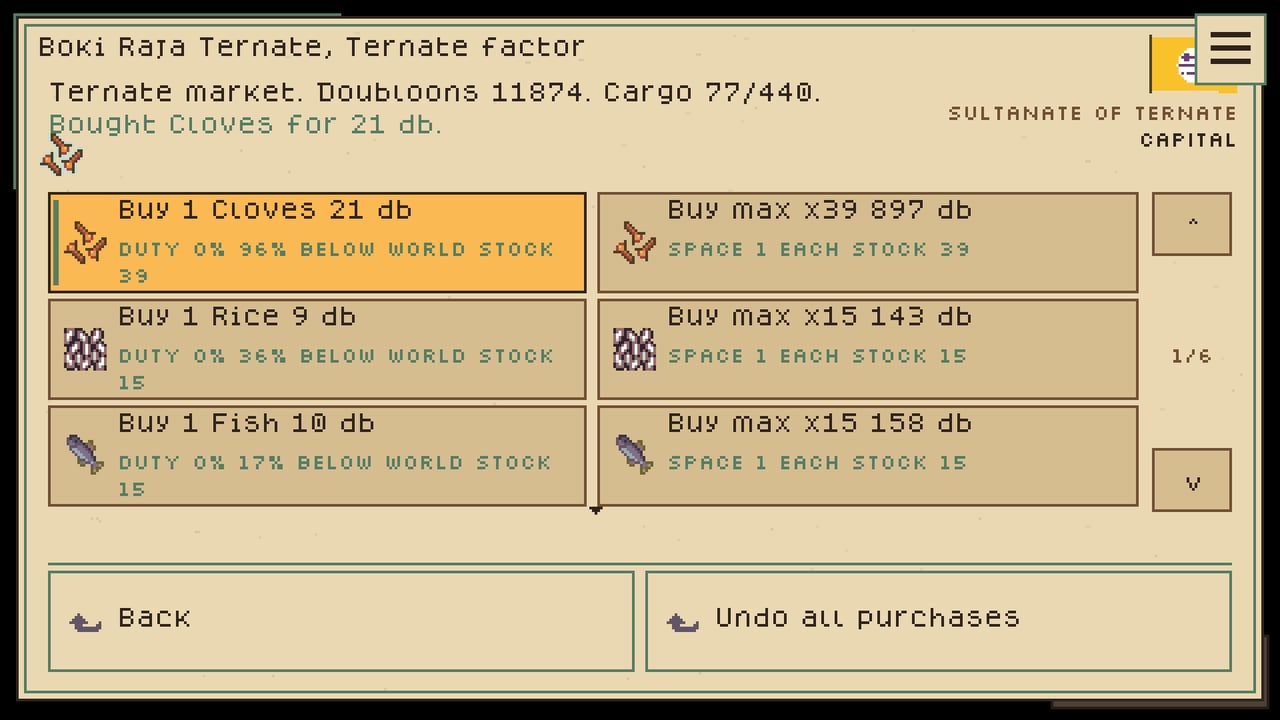
Trade is how most Marque & Reprisal captains fund upgrades, stores, and ambition. Across the 331 cities of the 1522 Earth map, the same goods clear at different prices. Supply and demand shift when you buy or sell and when hundreds of NPC ships work the same lanes. This guide shows how to read the Prices table, use the merchant tip, respect duties, and build routes that pay without stranding you hungry. Cross-link Getting Started for first-voyage habits and Sailing Controls so your cargo actually arrives.
Buy low, sell high — with eyes open
Every port posts local buy and sell quotes. A cargo that is cheap beside its source can be dear a sea away. Your job is not to memorize a static spreadsheet; it is to spot spreads, test them, and leave before the market moves against you. NPC merchants constantly rebalance stock and specie, so a golden gap can shrink after one fat fleet passes through.
Keep three numbers in mind on every dock:
- Local buy price — what you pay to load a unit here
- Expected sell price at the destination (and how stale that intel might be)
- Duties, discounts, and hold space — friction that turns a paper profit into a real one
Never empty your purse into a single hold. Food, water, and a cash buffer for the next dock matter more than a perfect theoretical margin. Survival explains why empty stores end runs faster than bad trades.
The Prices table and one-unit tests
Open Prices before you commit. Merchants can show a full local ledger sortable by good, local buying price, or difference from the world price. Available Buy/Sell quotes behave like buttons: select one to trade a single unit with the same sounds and flying-goods feedback as the bulk market. Unavailable lines explain why. Undo works; quest cargo and embargo warnings still apply.
Use one-unit trades as scouts. Confirm the spread, sail the hop, sell the sample, then decide whether to fill the hold on the return or the next loop. Bulk trading remains in the ordinary market once the route is proven.
Ask the merchant
Beside the trade controls, the ? button asks for a promising first-unit idea: what to buy here, the current price, and what a recommended destination would pay. Duties and discounts are included in the advice, but prices can still move before you arrive. If nothing profitable exists, the merchant says so — believe them and fish, take a quest, or sail on instead of forcing a bad cargo. Returning to the market preserves Undo.
Duties, standing, and access
Ports are not free warehouses. Duties skim margin; poor standing can lock doors or invite hostility. Lawful trade keeps more lanes open for escorts and future bombardment politics — see Combat & Piracy. If war closes destinations, NPC traffic waits; you should too, or reroute. Embargo and quest-cargo rules protect mission goods from casual sale — read the warning before you click.
NPC markets and living routes
You are never alone on a profitable lane. Hundreds of AI ships chase riches on the same map. That competition is the game’s economy: they create shortages and gluts you can exploit if you arrive at the right moment. Hail friendly captains when standing allows — barter cargo-for-cargo toward the market they are sailing to, with bargaining skill improving offers. Mission cargo stays protected. Escorts from well-disposed armed captains can guard a rich haul for part of a voyage.
Demo theater: Mediterranean practice
In the free Mediterranean (+ Black Sea) demo, goods such as iron, salt, and gunpowder already show local sources and clear spreads. Practice short loops: buy where a good is common, sell where it is scarce, restock stores, repeat. Demo Tips expands practice routes without risking a full-globe captain.
Signature long game: Spice Islands to Europe
A classic high-reward idea — load cloves and nutmeg in the Spice Islands, round the Cape of Good Hope, and sell into European demand — shows why bigger holds matter. That run is for a later captain with food, water, weather discipline, and a hull ranked for cargo on the Ships Tier List. Treat it as a north star, not day-one homework.
Colonies and new prices
Colonists seeking New World passage can found new cities with you. Fresh ports mean fresh quotes and new gaps. Factor colony detours into stores planning; a founding run that arrives starving is a failed investment.
Ship changes without stranding cargo
When you swap hulls, fewer bunks or less cargo space no longer hard-locks the choice. Sell or discard excess, dismiss extra crew, undo, review the full exchange, then confirm. At a lawful port, discarded trade cargo can sell at market rate. Fresh water is handled as its own category in exchanges — do not mistake it for ordinary trade goods.
Route-building checklist
- Dock → open Prices → sort by gap vs world price
- Ask the merchant ? for a first-unit suggestion
- Buy one unit → sail a short hop → sell → measure real profit after duties
- If the loop works, scale cargo while keeping store reserves
- Fish on passage for food and side coin — Fishing & Whaling
- Re-check Prices every dock; NPC fleets invalidate yesterday’s notes
- Upgrade hold size only after two or three clean loops
Common trade failures
- Chasing a rumor across an ocean with half a day of water left
- Ignoring duties until the “profit” evaporates at the pier
- Selling quest cargo by accident
- Fighting on a merchantman because a pirate looked small — run and trade another day
- Filling every slot with spice and zero food
Where trade sits in the wiki
Return to the Guides Hub for the full set. Compare cargo hulls on the Tier List Hub, verify specs on System Requirements, and watch economy-facing changes in Launch Notes. Official channels remain on the Links Hub.
Prices move. Captains who treat every dock as fresh intel — and every hold as a mix of cargo plus life support — out-earn the ones who memorize a single “best route” and die defending it.
Frequently Asked Questions
Quick answers for captains planning their next voyage.
How does trading work in Marque & Reprisal?
Buy goods where local prices are low and sell where they are high. Supply and demand shift with your trades and with hundreds of NPC ships on the same routes.
What is the Prices table for?
It shows local quotes you can sort by good, buy price, or gap versus world price. You can trade one unit straight from an available Buy or Sell quote to test a route.
What does the merchant ? button do?
It suggests a promising first-unit trade: what to buy, the price here, and what a recommended destination would pay, including duties and discounts. Prices may still change before you arrive.
Should I spend all my money on one cargo?
No. Keep reserves for food, water, and duties. A stranded hold with no stores ends the captain even if the cargo looked perfect on paper.
Can I trade with other ships at sea?
Yes. Friendly captains may offer cargo-for-cargo barter toward the market they are sailing to. Bargaining skill can improve the offer; mission cargo stays protected.